From Tradition to Modern Biomedical Science
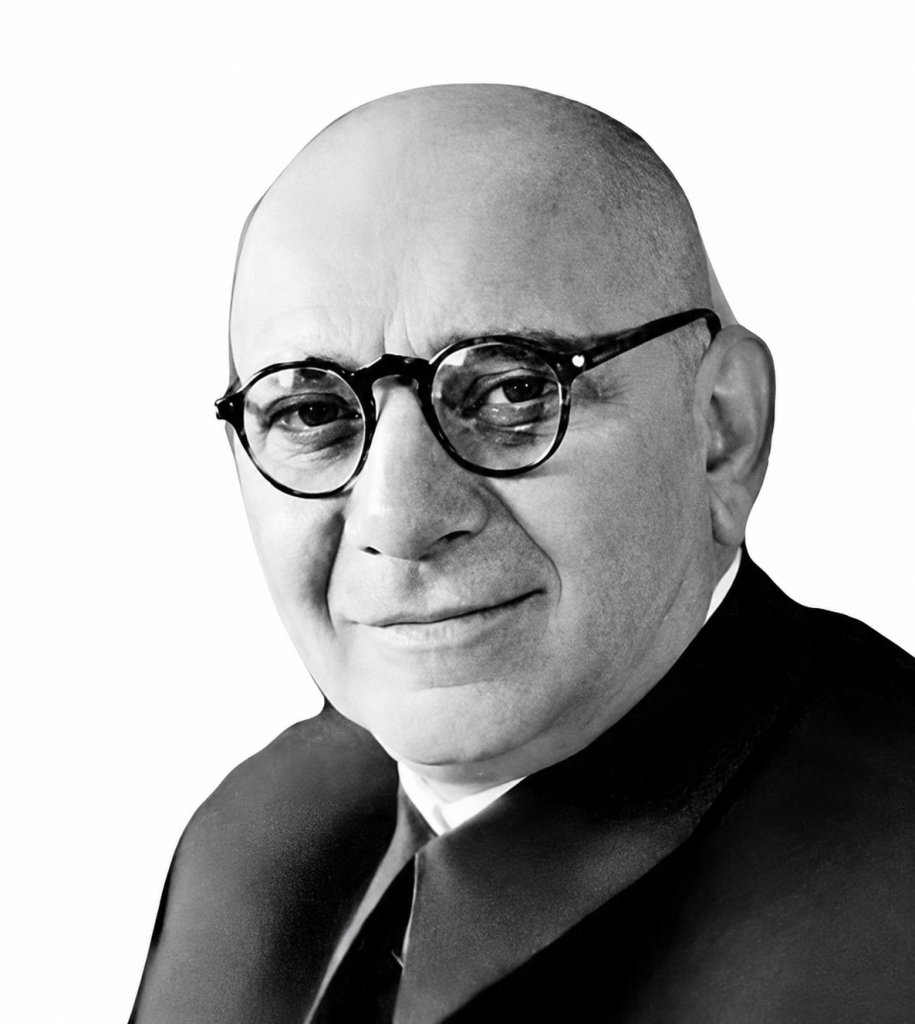
The history of the Alexander Natishvili Institute of Morphology at Ivane Javakhishvili Tbilisi State University dates back to 1946. The Institute was founded by Academician Alexander Natishvili, the founder of scientific morphology in Georgia.
From its establishment, the Institute became an important scientific center for morphological sciences and, over the decades, made a significant contribution to the development of anatomy, histology, cytology, pathology, and experimental medicine in Georgia.
Alexander Natishvili and the Georgian School of Morphology
The Institute’s first director, Academician Alexander Natishvili, was the founder of the Georgian school of anatomy, the author of the first Georgian textbook of anatomy, and one of the creators of Georgian medical terminology.
His scientific and educational activities laid an important foundation for the development of modern medical education and morphological research in Georgia.
The scientific school established around the Institute played an important role in the training of biomedical researchers and in bringing fundamental and practical medicine closer together.
Development of Scientific Research Areas
The history of the Institute is closely linked to the development of new scientific research areas and research methods in Georgia.
Experimental Modeling
Integration of morphological research with experimental medicine.
Artificial Organ Analogues
Development of research on the replacement of organs with artificial analogues.
Electron Microscopy
Early introduction of electron microscopy in Georgia and expansion of research on cellular and subcellular structures.
The Institute played an important role in:
the development of experimental modeling — linking morphological research with experimental medicine;
the development of approaches to organ replacement using artificial analogues;
the introduction of electron microscopy — electron microscopy was introduced in Georgia for the first time at the Institute, significantly expanding the possibilities for studying cellular and subcellular structures;
the introduction of histochemical and immunohistochemical methods, which created new opportunities for the study of pathological processes;
the establishment and development of anthropology, andrology, and gerontology as independent scientific research areas.
From Morphology to Translational Medicine
An important feature of the Institute’s development has always been the integration of fundamental morphological research with practical medicine.
Traditional anatomical and morphological research was gradually complemented by experimental, clinical-diagnostic, and modern molecular methods.
Today, the Institute’s scientific profile encompasses clinical and experimental pathology, clinical anatomy and experimental modeling, gerontology and palliative medicine, molecular and digital pathology, electron microscopy, cellular and tissue research, and other modern biomedical fields.
Continuing the Tradition in the Modern Era
In the 21st century, morphological sciences are becoming increasingly connected with molecular data, digital technologies, and personalized medicine.
As part of this development, the Institute is strengthening the field of molecular pathology, developing modern research and educational infrastructure, and integrating digital pathology and artificial intelligence into biomedical research.
In recent years, the Institute’s research activities have included organ regeneration and transplantation, molecular pathology of cancer, neurodegenerative processes, gerontology and palliative medicine, digital pathology, and AI-based biomedical research. At the same time, international research collaboration and the Institute’s participation in international grant projects are expanding.
80 Years in the Service of Science
In 2026, the Alexander Natishvili Institute of Morphology marked 80 years since its establishment.
Over eight decades, the Institute has evolved from classical morphological research to modern molecular, translational, and digital biomedical science.
Today, the Institute’s development is based on the same principle that has guided its history — preserving scientific tradition while continuously integrating new knowledge and technologies.